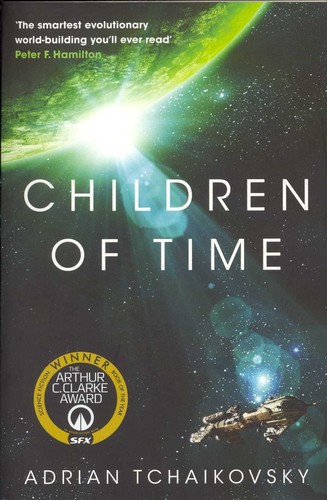
I’ll admit the premise sounded like a hard sell when a friend described it to me, spiders, thousands of years of evolution, alternating chapters, and I get why some readers bounce off it in the first hundred pages because the human sections start slow and the spider sections ask you to root for something that should by all rights creep you out. But by the time the spider society hit its first real civilizational crisis, plague, war, a caste dispute over whether males count as people, I was more invested in them than in the humans stuck in cryo-sleep bickering about ship politics.
The names carrying through the generations, the same handful of spider names, Portia, Bianca, Fabian, recurring across thousands of years of spider evolution as each generation’s most notable individual earns the title, is a small structural trick that does a lot of work. It gives you continuity across a book that otherwise spans an inhuman amount of time, and by the fourth or fifth Portia I felt the same kind of fondness you’d have for a character who’d actually been alive the whole book. The evolutionary biology is doing real thinking too, not just dressing, the way the spiders solve problems using pheromone-based computing and web vibration language feels earned rather than hand-waved.
I went and read a thriller immediately after finishing this because I didn’t know what else could follow it, which is about the highest compliment I can pay a book. Five stars, and it’s rare that I finish something this ambitious in scope and still care about the small stuff, a single spider’s name surviving three hundred generations.