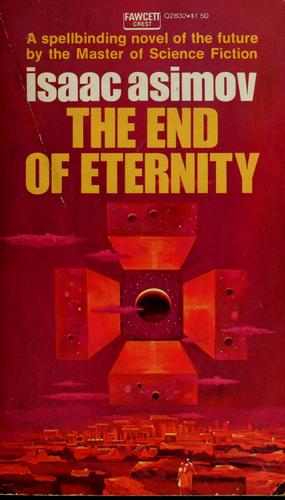
This gets overlooked next to the robot novels and the Foundation series and that’s a shame, because the premise here is doing something sharper than either of those. Eternity is an organization of time travelers who nudge history in tiny increments, a shipment delayed here, a conversation redirected there, all in service of minimizing human suffering across the centuries. The book’s real question isn’t whether time travel works, Asimov handles the mechanics competently enough, it’s whether an organization dedicated entirely to preventing pain has quietly made humanity boring, safe, and stagnant in the process.
Harlan, the main character, is not an easy person to spend a book with. He’s arrogant, controlling, and his relationship with Noÿs reads as possessive in a way that a chunk of readers rightly flag as dated and uncomfortable by today’s standards. I went in prepared to be annoyed by him and mostly was, right up until the final twist reframes everything he thought he understood about his own choices, and the last line lands hard enough that it retroactively justified sitting with him for two hundred pages. It’s rare for a book with a genuinely unlikable protagonist to also have an ending this good.
The prose is talky in the way a lot of fifties Asimov is, characters explaining the plot to each other more than the scene showing it, and the cast is thin outside of Harlan and Noÿs. But it’s aged better than a lot of its contemporaries, mostly because the ethical question at its center, whether preventing every disaster is actually a kindness, doesn’t have an obvious answer even now. Four stars.